Canny vs QuickBooks
QuickBooks Online covers bookkeeping, VAT, Self Assessment, CIS and payroll for small businesses. Its UK pricing page doesn't mention filing a company tax return or Companies House accounts, so a limited company typically still needs an accountant or a second product for the year end.
Read this first. Canny is in development and not yet recognised by HMRC or Companies House. This page compares the planned first release with what QuickBooks offers today. Facts about QuickBooks come from this page, checked on 14 November 2026. If something is out of date, tell us and we'll fix it.
Side by side
| Canny | QuickBooks | |
|---|---|---|
| What it is | Native Mac and iPhone app for UK micro-companies and sole traders | Online accounting subscription |
| Runs as | Native Mac and iPhone app | Web app, plus mobile app |
| Bookkeeping and bank import | Yes | Yes |
| VAT returns (Making Tax Digital) | Yes | Yes |
| Company tax return (CT600) and accounts | Yes, in the same app | — (not mentioned on its pricing page) |
| Where your data lives | Your own iCloud | Intuit's servers |
| Price | £49 once, plus £79 for each year you file | Monthly subscription; see their pricing |
| Cost of a typical first year | £128: the app (£49) plus one year-end pack (£79) | Depends on the plan; QuickBooks shows live prices on its site. |
| Available now | No, in development | Yes |
Choose QuickBooks if
- You need payroll or CIS.
- Your accountant uses QuickBooks and handles your year end.
- You're a sole trader who wants a big-name subscription.
Choose Canny if
- You want the company's year end filed from the same app as the books.
- You don't want a monthly bill.
- You want a native Mac and iPhone app with your data in your own iCloud.
What Canny looks like
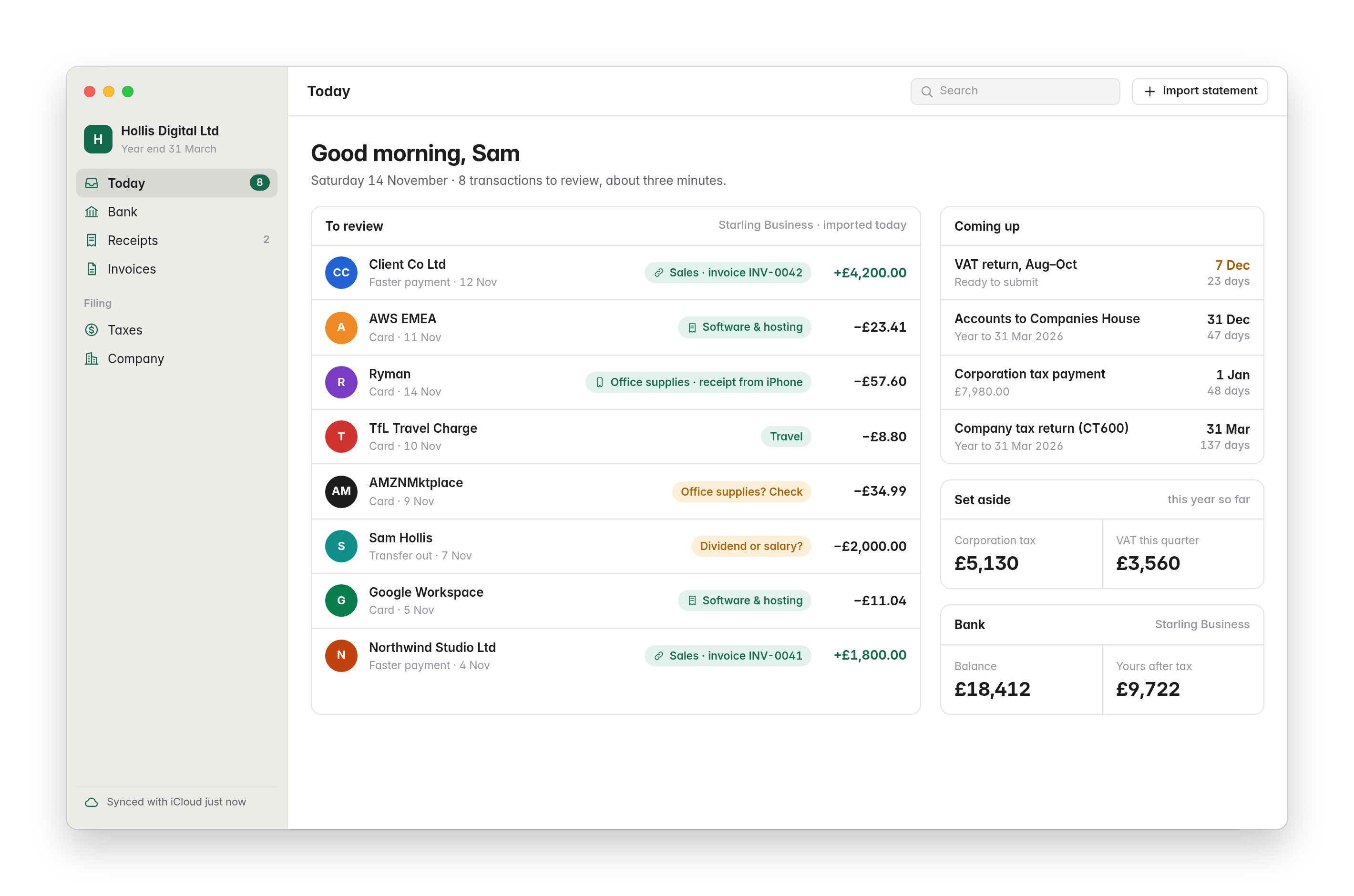
One window for the whole year: bank lines to review, receipts from your iPhone, and the next deadline always in view.